
Tomato Sorting Machine Design Principles
In the tomato processing industry, tomato sorting is a crucial step in raw material pre-processing. Tomatoes of different sizes hold varying value for subsequent processing, packaging, and sales. Automated sorting using a tomato sorting machine not only enhances grading efficiency but also reduces the need for manual labor and improves the utilization rate of raw materials. So, what is tomato sorting machine design principles?
It should be noted that different types of sorters operate based on different design principles. This article focuses on the principles of tomato size sorters.
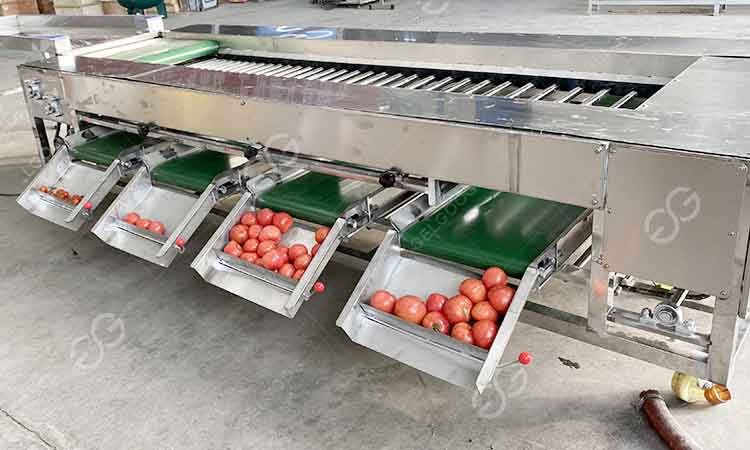
Basic Design Principle
This sorting machine automatically sorts tomatoes based on differences in their diameter. Its core design utilizes multiple sets of parallel rollers to create adjustable gaps. As tomatoes move forward along these rollers, smaller ones fall through the narrower gaps, while larger ones continue to be conveyed forward until they reach a gap appropriate for their size.
This design is simple in structure and allows for a continuous grading process, making it well-suited for high-volume tomato processing in food manufacturing plants.
Operational Process
Step 1: Uniform Feeding of Tomatoes
Pre-sorted tomatoes are fed into the sorting machine via a conveyor belt or feeding mechanism. To ensure accurate grading, it is essential to prevent the tomatoes from piling up or being crushed against one another; the fruit should be distributed and arranged across the rollers.
Step 2: Roller Conveying and Size-Based Sorting
As the rollers rotate, the tomatoes are propelled forward. The equipment features grading channels with gaps between the rollers that vary in size along the machine’s length.
When a tomato is smaller than the gap at a given point, it falls through into the collection area below. If a tomato is too large to pass through, it continues moving forward along the rollers toward the next grading section.
Step 3: Post-Grading Transport
Tomatoes, now sorted by size, are directed into their respective collection chutes or onto separate conveyor belts, from where they may proceed to subsequent stages such as washing, packaging, crushing, or other processing operations.
What other products can a tomato sorter process?
In addition to tomatoes, this machine can be used for size-grading a wide variety of fruits and vegetables, depending on factors such as the gap between the rollers, the equipment's configuration, and the specific characteristics of the produce.
Fruits: Citrus, oranges, lemons, apples, pears, peaches, and plums.
Vegetables: Potatoes, onions, etc.
It should be noted that not all fruits and vegetables are suitable for this type of sorter. For produce that is irregularly shaped, prone to bruising or pinching, or has a delicate surface, it is necessary to select an appropriate type of sorting machine based on the specific characteristics of the product.